Jews of Rhodes: Family Memories & Heritage · Facebook
5 people detected · 0 identified


AI Analysis
Estimated by AI — help us verify
✨Date Estimate — AI Estimated
circa 1928
✨AI Reasoning — AI Estimated
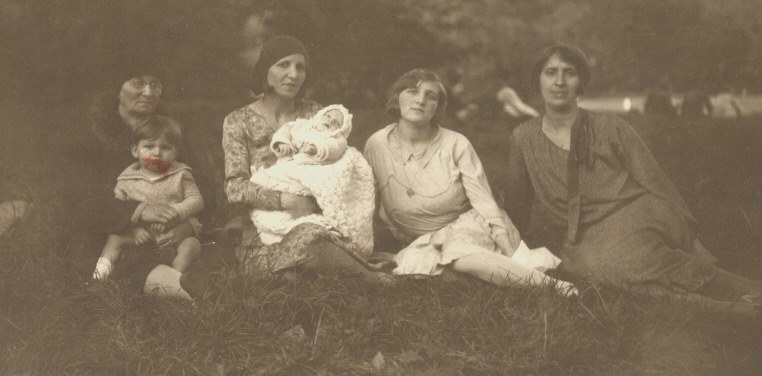
The fashion is the primary dating signal. The cloche hats and bobbed hair were at their peak in the mid-1920s. Given the cultural lag often seen in these communities, a date in the late 1920s is most probable. The casual, non-studio nature of the photo suggests a family outing.
✨Location Estimate — AI Estimated
Rhodes, Greece, Mediterranean
Confidence: mediumLikely New York City (Central Park or similar) or Rhodes; the casual park setting is common in early immigrant 'leisure' photos.
✨Scene — AI Estimated
A group of four women and two children are seated on the grass in an outdoor park setting. An older woman on the left holds a toddler, while a younger woman next to her holds an infant swaddled in a thick knit blanket. Two other women sit to the right, all dressed in 1920s-era daywear including cloche hats and bobbed hair.
✨Tags — AI Estimated
✨Photo Detective Evidence — AI Estimated
Photo Detective Analysis
Analyzed with Gemini 3-flash (v2_rich_metadata)Print/Physical
Sepia-toned monochrome print with matte finish
moderate (1910-1935)Soft focus background with sharp foreground, typical of early 20th-century handheld consumer cameras
moderate (1915-1935)Fashion/Grooming
Women wearing cloche-style hats
strong (1923-1931)Bobbed hairstyles visible on younger women
strong (1920-1930)Dropped waistline and loose-fitting chemise-style dresses
strong (1922-1929)Environment
Casual outdoor seating on grass, likely a public park
weak (1910-1950)Technology
Candid outdoor photography, indicating a portable roll-film camera
moderate (1915-1940)Cultural context: Fashion cues (cloche hats, bobs) are quintessential mid-1920s; adjusted slightly forward to late 1920s to account for Sephardic community adoption and immigrant context.
✨Subject Ages — AI Estimated
62, 3, 28, 0, 22, 35
✨Clothing & Attire — AI Estimated
Two women wear cloche hats; younger women have bobbed hair. Dresses feature dropped waists and loose silhouettes. The infant is in a heavily textured knit bonnet and blanket. The toddler wears a knit sweater. There is a red mark/damage on the toddler's face on the print.
Face Analysis
Gemini coordinate bridging (gemini-3.1-pro-preview)
Scene: Group portrait of women and children sitting on the grass outdoors, likely taken in the 1920s or 1930s based on clothing and hairstyles.
Face 0
Age: ~60 | Female
Older woman with glasses, wearing a dark hat or head covering.
Attire: Dark clothing, possibly a coat or dress.
Position: Far left, sitting.
Features: Glasses, dark head covering.
Face 1
Age: ~3 | Male
Young child with short hair, looking towards the camera.
Attire: Light-colored sweater or top.
Position: Left side, sitting on the older woman's lap.
Features: Red mark or discoloration on the lower face/chin area.
Face 2
Age: ~30 | Female
Woman with a dark cloche hat, looking towards the camera.
Attire: Patterned dress or blouse.
Position: Second from left, sitting, holding a baby.
Features: Cloche hat, patterned clothing.
Face 3
Age: ~25 | Female
Woman with short, light-colored hair, looking towards the camera.
Attire: Light-colored blouse and skirt.
Position: Second from right, sitting.
Features: Short, light hair, light-colored clothing.
Face 4
Age: ~35 | Female
Woman with dark hair, looking towards the camera.
Attire: Dark dress or top with a dark scarf or tie.
Position: Far right, sitting.
Features: Dark hair, dark clothing with a scarf.
Nobody in this photo has been identified yet — can you help?
Help us identify the people in this photograph. Your family knowledge could be the key to preserving our shared history.