Unidentified Person 608 is not currently tagged on this photo.
You reached this photo from that person's gallery, but no current face assignment matches them here. Review before trusting this link.
Jews of Rhodes: Family Memories & Heritage · Facebook
1 person detected · 0 identified
Person in this photo
Compare faces
AI Analysis
Estimated by AI — help us verify
✨Date Estimate — AI Estimated
circa 1943
✨AI Reasoning — AI Estimated
The combination of the thin mustache and the specific tie width/pattern strongly suggests the early to mid-1940s. The format is consistent with a passport or ID photo.
✨Location Estimate — AI Estimated
Rhodes, Greece, Mediterranean
Confidence: mediumUnknown, but surnames Hazan and Sadis are strongly associated with the Rhodes Sephardic community.
✨Scene — AI Estimated
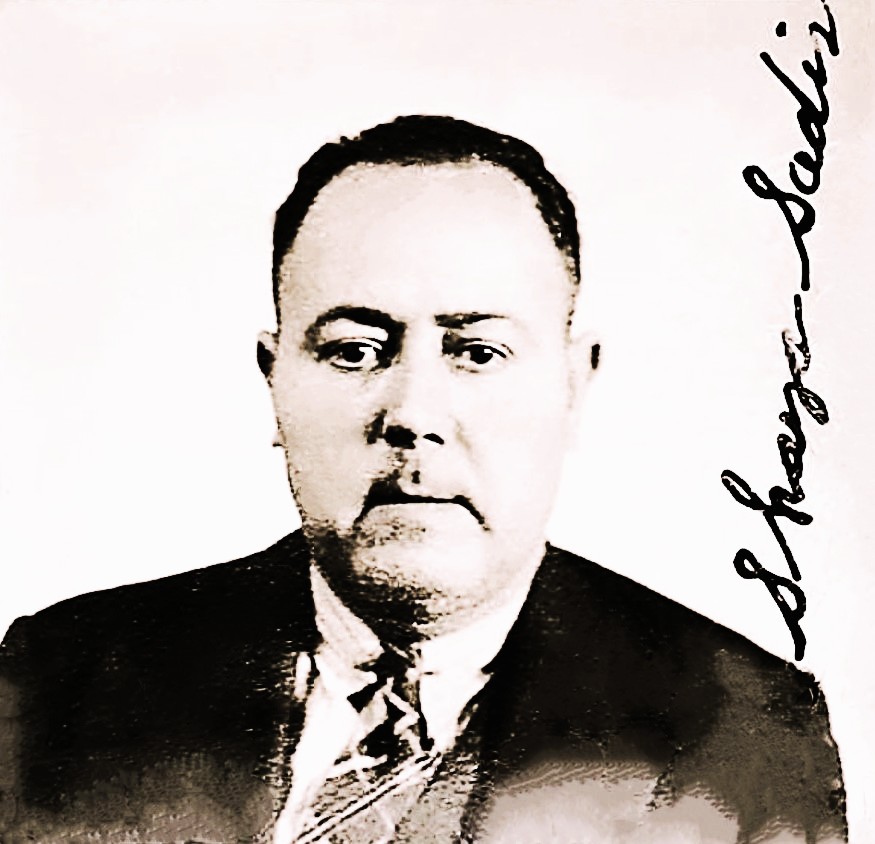
A high-contrast head-and-shoulders portrait of a middle-aged man. He has short, dark hair with a receding hairline and a thin, well-groomed mustache. He is dressed in a dark suit and a patterned tie, facing the camera directly against a stark white background.
✨Visible Text — AI Estimated
S. Hazan Sadis
✨Photo Detective Evidence — AI Estimated
Photo Detective Analysis
Analyzed with Gemini 3-flash (v2_rich_metadata)Print/Physical
High-contrast black and white, likely a scan of an identification document or passport photo
moderate (1930-1955)Fashion/Grooming
Thin, groomed mustache popular in the late 1930s and 1940s
moderate (1935-1948)Wide tie with a bold, possibly geometric or floral pattern
moderate (1940-1950)Pointed shirt collar and dark suit jacket
weak (1930-1950)Technology
Frontal, flat lighting typical of identification or administrative photography
weak (1920-1960)Cultural context: Formal grooming and attire in Sephardic communities often retained 1930s aesthetics into the post-war period.
✨Subject Ages — AI Estimated
48
✨Clothing & Attire — AI Estimated
Dark suit jacket, light-colored dress shirt, and a wide tie featuring a prominent decorative pattern.
Nobody in this photo has been identified yet — can you help?
Help us identify the people in this photograph. Your family knowledge could be the key to preserving our shared history.